Friday, September 22, 2017

Everybody is Somebody

There's a CD that's been floating around my family's minivan since June. It's kind of miraculous it hasn't been scratched beyond playability given the number of adventures we took between June and August. One particular song on the album, though, has caught my children's fancy--especially my almost four year old son. The song is by the wonderful Taj Mahal, and the introduction to his chorus goes like this:

Everybody is somebody.
Nobody is nobody.


"Dad," my son asked me the other afternoon.
"What does that even mean?"

I tried to explain the notion of identity, inclusivity, pluralism, to his little self, a mere 45 months of living under his belt, as he built a skyscraper out of blocks.

Afterwards he blinked, smiled at me, and said,

"Of course everybody matters...because they're people." Then he was off, scampering away to attend to another project of the utmost importance.

And I was left--as I often am--to bask in the wake of his brilliance.

----------------------------------------------------------------

When I was in high school I had a friend who didn't like rice. He used to joke that "the only thing rice is good for is satisfying one's craving to eat a thousand of something." I don't know how many grains of rice are in a serving, but I do know that a thousand is a big number. And I know that (thanks to Enrico Fermi) if I started counting now, it would take me almost two weeks to count to a million.

A billion, though? Gosh, that would take even longer...but by how much? 

There are roughly 7,500,000,000 people on the planet right now. And, as far as my son and his pal Taj Mahal are concerned, everybody is somebody. I was reminded of this over the course of the summer. I was reminded how human we are...how much people matter. There are 7.5 billion of us, yet each of us matters so much. Remove a blade of grass, a grain of rice, a CD from my minivan, and each is replaceable. But people? We are irreplaceable. Surely some people are remembered longer than others, and you and I will likely not ever be famous. In fact, Emily Esfahani Smith wrote about how we're all destined for ordinary (and why that's okay...and important) in a recent New York Times article. But to the people in our spheres of influence, we matter so much.

But even the humans who are famous are undeniably human, vulnerable, and humbled by the swells of emotion that come with being human. NBA star Isaiah Thomas reminded us of this when he wrote a letter describing how sad being traded made him...how he had two young sons who were so excited to start school in Boston, but now they were moving to Cleveland.

David Torrence died this summer. I was heartbroken. He drowned in a pool. That David was an Olympian distance runner (and American record-holder in the 1000m indoors) matters less than how David lived as a human being. The outpouring of love from those who knew him was staggering, though not surprising. David was amazing. He lived for amazing. He raced hard. He raced fast. He loved people. He lit up rooms. What David did as an athlete was such a minor blip on the register of human impact. What he did off the 400m oval on which he went to work, though...JP Slater said it best, "He was a competitor. But he was also a giver."

We all have the potential to do this, don't we? To give a part of ourselves to something bigger. To stretch beyond our survival and self-interest. To go beyond winning (whatever that means).

All of these ideas swirled in my head as I embarked on the beginning of my school year. It's my tenth year at my school. My twelfth year as a teacher. A decade working with 8th graders. I have the pleasure of getting to know my students in the classroom as thinkers and listeners and learners. But I also have the opportunity to know them as people. As somebodies. These moments happen on the loops we run at cross country practice, during advisory, recess, study hall, and during the field trips we take. Often, the most meaningful moments of learning don't actually take place in the classroom; instead, they take place in the in-between times, the brief encounters when we actually learn something about each other...me and my students, my students and me. As my 4 year-old knows, they're people after all. Somebodies, sure. Irreplaceable, all of them.

(gosh, 30 minutes flies by. PUBLISH.)

Thursday, May 18, 2017

We were made for this (a lesson on Ikigai)


This Japanese word, ikigai, is among my favorite words ever. Rob Bell defines it as "the reason you get up in the morning" and I like that, too. I think of it, however, as an understanding of purpose...of believing--of knowing--I was made for this.

Today, though, I've been thinking most explicitly about the righthand part of that graph:


what the World NEEDS

Goodness, doesn't the world need so much right now? 

At my school we have a wonderful mission statement. Our mission is 

...to guide students to reach their intellectual, creative, moral, and physical potential. We value the imagination and curiosity of children and respect childhood as an integral part of life. Our teachers set high academic standards and challenge students to question, to think, to collaborate, and to act with integrity. The school works in partnership with families to teach personal, social, and environmental responsibility and to create a community that honors diversity and our common humanity. New Canaan Country School inspires students to be lifelong learners with the courage and confidence to make a positive contribution to the world.

I love teaching English and World Cultures to eighth graders because I see such a deep, mission-driven connection to the last sentence of this statement. But to truly integrate the idea into the fabric of a student's trajectory, the mission and passion (in the above graphic) must be fully illuminated, fostered, and celebrated.

Thus, students must know

WHAT AM I GOOD AT?

WHAT DO I LOVE?

WHAT DOES THE WORLD NEED?

WHERE DO THESE THREE THINGS INTERSECT?


There are no excuses for our students to lack understanding here. We must give them feedback about what they're good at, we must open avenues into their stories and experiences, we must guide them toward answering big questions about the world, and we must take them to the doorstep of selflessness by encouraging them to help others.

We live in an era of selfies and self-promotion,
but tomorrow's citizens of the world need 
to see the value of ethics and selflessness
and believing in the art of doing GOOD 
in a world of strangers.

As the great, late Grant Wiggins encouraged, we must endeavor to "teach less and provide more feedback." This means that we should be facilitating student inquiry, engagement, and empowering them to dig deeper into the things that matter to them and how they connect with what the world needs.

Last week, Bill Gates shared a flurry of advice, in the form of a series of a dozen or so tweets (which, chronologically, should be read from the bottom up).


Here's Bill Gates suggesting that his wish for young people is that they understand inequity sooner, and surround themselves with people who challenge, teach, and encourage them to be their best selves.

What Mr. Gates is saying, is you need to discover your ikigai.

We all do.

It is imperative. 

There is no other course of action.

And schools are the places this can take place.

Whether inside or outside the curriculum, every teacher must understand and value the links between learning, understanding, becoming inspired, encouraging each other, collaborating, and developing the courage and confidence to go forth and change the world both locally and globally.

...after all, we must till the soil, remove the rocks, sow the seeds, cultivate the plants, weed (and weed, and weed), before we can reap the harvest.

After all, there is a harvest waiting to be shared

and we were made for this.


Thursday, May 4, 2017

"Whatever that storm may be"

A novel, a tweet, a short story, an article, and a poem.

This week I absorbed five memorable pieces of "literature."

I read Thirteen Reasons Why by Jay Asher.

I read "The Handsomest Drowned Man in the World" by Gabriel Garcia Marquez with my students.

I read "[The Day With All its Pain Ahead is yours]" by Derek Wolcott, again with my students.

I read an article entitled "A revolution in tenderness" by Courtney Martin on Krista Tippett's On Being website.

Finally, I read the following tweet, this morning:


Each of these literary stimuli provided me with an opportunity to reflect. To pause. To slow down and appreciate the importance of simply being AND being simple. So here is what I learned from each of these additions to my own heart's library of canonical merit.

1. Thirteen Reasons Why

Conversation around this book (and the concomitant Netflix series) has been widespread in schools. I read the book because my students were reading it and I always want to understand them better. My takeaway was that it starts a conversation. But the conversation cannot be skipped. We can't let young people walk away from the story of Hannah Baker's suicide thinking "One missed opportunity could have reversed someone's depression, isolation, or mental health struggles." That might work in the role play, the video game, or the Netflix series...but---and I speak from experience here--depression is about the chemicals in our brains, it's beyond convincing, rationalizing, or believing...it is a disorder that extends beyond the widest scope of our collective understanding. Not only does it look different, feel different for everyone, it cannot be understood by anyone outside of the skin they're inhabiting. And the triggers in this book are intense...too intense...dangerously intense. Nevertheless, my biggest take-away is that we need to push the conversation. Kids want to talk. Adults need to talk. Human beings need connection. We need to ask how our friends are and we need to mean it and wait for the answer. We need to be better listeners and reacquaint ourselves with the people with whom we interact. People need people. And that takes all of us. I am not advocating for anyone to read the book, but the book reminded me that there are things we feel that must be acknowledged (a great follow-up book would be Jamie Tworkowski's If You Feel Too Much, or his short memoir article, "To Write Love on Her Arms").

2. "The Handsomest Drowned Man in the World."

I read this story with my 8th grade English class. As my students reflected upon the magical realism embedded within the story of Esteban, the giant who washed up on the shores of a small Spanish village, they moved beyond themselves. They grasped the magnitude of a man who was, quite literally, beyond measure, and they saw the human need to believe in someone who could save them. Even in his death and the mystery of his origin, Esteban transforms a village and reframes reality for the lives of the people who encounter his legend. "Just think," one student said, "what it would have been like if we could see the impact that one dead man, and the villagers' willingness to believe in miracles, could have had on the future generations."

3. "[The Day With All its Pain Ahead is yours]"

Derek Wolcott's piece taught me there are stories in the subtexts of the stories we tell, the poems we live. In the contrasting imagery between beauty and pain, Wolcott's words remind us that in the midst of our heart's ache for carpe diem, the world humbles us as it ruins us and destroys us, in ways that--as a direct result of pain experienced, hardship endured, mistakes made--grow and prune us in both wisdom and experience.

4. "A revolution in tenderness"

While TED talks are often criticizes for sustaining a spirit of "slacktivism" without action, in Courtney Martin's response to the Pope's TED talk, she pushes the narrative beyond consumption and assigns emotional homework. While the Pope asks,

 “And what is tenderness? It is the love that comes close and becomes real. It is a movement that starts from our heart and reaches the eyes, the ears and the hands. Tenderness means to use our eyes to see the other, our ears to hear the other, to listen to the children, the poor, those who are afraid of the future.”

Martin replies,

"So this week, I’m going to do an experiment. I’m going to slow down wherever and whenever I feel tenderness — in myself or others — and actually experience it. I’m going to use my eyes and ears to take it in, to express it, to make it real in public. I’m going to, as the TEDsters might say, “disrupt” the dominant culture — not with a new app or a crazy idea — but with the unorthodox assumption that there is room enough for tenderness, here and now, always. Join me?"

Disrupting the dominant culture with tenderness was the life work of Siddartha Gautama, Asoka, Jesus, Gandhi, Martin Luther King, Jr. It's got a good track record of revolution in the midst of weakness.

5. "...worry smaller"

@Jomnysun is one of my favorite follows on Twitter. According to his bio he is "aliebn confuesed abot humamn lamgauge." 

But the reality is that he's so much more than that. He is also an alien confused by the essence of being human, and the art of doing it well. By witnessing the lenses through which an outsider might view the layers of "normalcy" our species has adopted, we can better understand ourselves.

The idea of worrying smaller is a beautiful one. While the idea of "one day at a time" isn't a new one, it is a valuable reminder that, while you only live once, if you do it right once is enough. This doesn't mean perfection, however. Rather, it means remembering to breathe, to cherish, to accept, to collect data from your experiences, to grow wiser in the midst of the storm (whatever that storm may be).


Thursday, April 13, 2017

Onward I go


My students have just finished writing poems. Each of them was asked to produce a chapbook of original poems and we spent nearly an hour reading to one another in the reading garden at my school. Every year I am flooded with emotion as I listen to the words of my students...to the emotions they've struggled onto the page...to the way they've put words to what cannot be said.

This year I made a list of the poems they shared. In reading the titles I'm reminded of how much my students feel, how much they know, how much they are learning. The learning they've shared in these poems, though, stretches far beyond knowledge...my students are wiser, their lives are richer, their pain is more aptly identified and catalogued, and they have grown. My, how they've grown. 

May we all feel that sense of freedom and growth, that triumph that comes from putting words to emotions and saying, here world...this was mine, but now it is yours. Do with this what you will and onward I go...

Friday, April 7, 2017

Art & Adventure


I recently made a list of things I enjoy. 

I wanted to do this to help me understand myself, to help me understand that having needs, preferences, desires that are entirely my own is so important...that my entire life, my family, my marriage, my teaching all functions better when I am whole, when I am the best version of myself. In the past I have relied heavily on running, but I now recognize that running has become somewhat of an addiction...something I use to hide from my emotions and the discomfort of life. It's a reset button, but I'm running away from things. I need more introspection and metacognition. I need to find the things I enjoy that help me slow down. I have been racing, racing, racing...and I don't need "reset," I need "pause."

So I made the list.

At the top were the words 

Adventure
Art

Of course there were so many other things on my list. Everything from rivers to switchback single-track trails to splitting wood to campfires to fireflies to coffee...the list went on and on.

But art and adventure encompassed so much of it.

A few weeks ago, my daughter and I visited the Yale Art Museum. I had never been alone with her in a museum like that and I was amazed by her knowledge of great artists. From afar she recognized Jackson Pollock, Georgia O'Keefe, Monet, and Degas. Walking at her pace, navigating rooms of shocking modern sculptures that defied the angles of our understanding, watching her bypass entire exhibits because they simply didn't strike her fancy...it was all so fascinating to watch her.

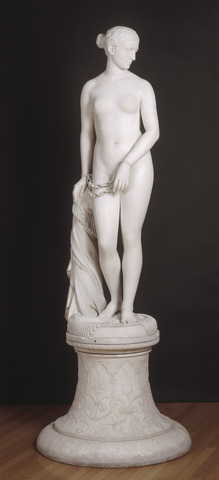
Her sense of wonder was most inspired by two sculptures: Hiram Powers' "the Greek slave" and Yinka Shonibare's "Mrs. Pickney and the Emancipated Birds of South Carolina." 


Each of them struck her deeply as she walked around them, gauging their depth, scrutinizing the artists' intentions, absorbing the sense that there was something deeper going on inside the images...that they were more about life than about art or, better yet, that they served as evidence that life was art. The artists had made her feel something and had spanned the lengths of time between the artist and that scrutinizing, adoring, six year old eye.

I think Naomi is right. It is all art. As we walked together back to the car, she saw art everywhere. In the shadows, the architecture, even in the melting snow. We talked about the poetry of penumbras (Allen Ginsberg), about the architectural genius of Frank Lloyd Wright and Buckminster Fuller, and about Andy Goldsworthy's art in nature.

I realized as I walked, hand in hand with my daughter, that there is so much I still have to learn...there is so little I know. She taught me to see beauty, to find adventure, in moments and minutiae I could have easily missed. 

Yet in the midst of it all, of one thing I was certain.

This I know:

It is all art. It is all an adventure.

Thursday, March 30, 2017

Life as an essay

Over the past few days I've had a really fun e-mail exchange with a friend and former colleague. During our time working together I always looked forward to the conversations we'd share and the e-mail exchange felt like an electronic renaissance of nostalgic proportions. The power of connecting with other humans never ceases to amaze me, and I am constantly left in awe of how much I enjoy gaining insight into the innerworkings of other people's brains.

One of the topics of our exchange included mention of recent books we'd read. I shared my enjoyment of Percival Everett's innovative, complicated, Italo Calvino-esque novel, Percival Everett by Virgil Russell.

In the novel, Everett writes,

"To a considerable degree, by the time we have reached a certain age, it varies for each of us, we have said all we meant to say. Everything else is either a reissue or an elucidation, a gloss. Some utterances might be reconstructions of some erased pages, palimpsests of sorts, but it’s mere repetition."

I asked my friend whether he agreed. His response included the following:

"In basic education, don’t we value repetition: keep writing / revising an essay until you get your point across? What if your life or my life is one long essay that keeps getting rewritten … elucidated … polished."

This idea, in turn, got me thinking about another quote I'd read this week as I prepared to discuss Animal Farm with my 8th grade English class. George Orwell, the novella's author, wrote an essay entitled "Why I write," which includes the following passage:

"All writers are vain, selfish, and lazy, and at the very bottom of their motives there lies a mystery. Writing a book is a horrible, exhausting struggle, like a long bout of some painful illness. One would never undertake such a thing if one were not driven on by some demon whom one can neither resist nor understand. For all one knows that demon is simply the same instinct that makes a baby squall for attention. And yet it is also true that one can write nothing readable unless one constantly struggles to efface one's own personality. Good prose is like a windowpane. I cannot say with certainty which of my motives are the strongest, but I know which of them deserve to be followed. And looking back through my work, I see that it is invariably where I lacked a political purpose that I wrote lifeless books and was betrayed into purple passages, sentences without meaning, decorative adjectives and humbug generally."

So where does all of this land me in my own understanding of myself, my students, and this journey of life that we share. Well, I do like the idea that our lives do share similarities with the drafting of an essay, but essays tend to get better and better, right? One would hope that each successive draft is more polished than the last. But any writer will tell you that there is a certain uncertainty to writing, too. An author-friend of mine who has been widely published to great critical acclaim, once confessed that he awakens each morning and has to literally look himself in the mirror and remind himself, "I am a good writer" over and over again.

I wonder, then, whether we might be penning essays that--during our weaker moments of struggle and self-doubt and reinvention possess those invariable moments of rambling fluff, misplaced citations, and blatant instances of plagiarism, along with the decorative adjectives and humbug generally of our lives. They're those "purple passages" where we lost the thread of thesis that was stringing everything together so nicely at the outset. Hopefully we all find the course again and the next chapter regains the magic that drew us (and our readers) in during that jaw-dropping introduction.

Life humbles us and can certainly be a "horrible, exhausting struggle," but there is also that opportunity for editing, revising, and refreshing the narrative. The characters have staying power, but the delivery and the elucidation of the soul of our writing--our lives--can, and does, evolve.

Thursday, March 2, 2017

The circles we touch

Today I had the opportunity to speak to a group of parents whose children had been offered acceptance to my school. It got me thinking about the fact that their children could end up being in my classroom someday, and would therefore be a part of the future history of my life.

And it got me thinking...

Years before I was born, one summer in the 1970s, my father bought a notebook for 29 cents.

He was driving across America, a relative Kerouac or Steinbeck in his own right. My father espoused on the people he met, the places he stayed, the things he saw and felt. One evening, he flipped open the journal (he'd bought it at the outset of his trip) and touched upon a point that is acutely familiar to those of us who work in schools: People come and go. Students, colleagues, friends. Relationships with parents vary from year to year and the depth and amplitude of connections ebb and flow. But, like the tide, sometimes they come back.

Here's what my dad put on the page:

...upon this circle will touch and sometimes enter strangers, known at first by some of us, or none, and so the circle will grow and change as we travel and move. Eventually each of us in the circle will leave it, some forever, some for a day or a year. As time passes the circle will change, the periphery will fade and new friends will draw near the center. 


Schools are just such human spaces. Spheres of connection and interaction...circles that envelop strangers and draw them close, inviting them to stay or go. I remember returning from the NAIS People of Color Conference in Houston five years ago and thinking, "there is nothing more important than ensuring everyone in this school feels connected to everyone else...that everyone feels known.

I was reminded of this recently when a current student of mine told me she had been accepted to a different school for next year and would not be returning.

Students come and go.

I was reminded, too, of the paper-thin existence of today, of our normalcy, of our able-bodiedness. Things change fast and there is no guarantee of tomorrow. Robin Williams reminds the boys in Dead Poets' Society "Carpe Diem" as they stare at old photographs of  former students from their school. We must seize each day in schools because we don't know what tomorrow holds. This is the oldest any of us have ever been, and we are all trying to be the best versions of ourselves. Teachers want students to be successful. Parents want children to be successful. And young men and women want to be successful, too. We all drive for the same thing and are consumers of the relationships we build.

I've always felt that my students stay the same age as my own wisdom develops from year to year. My students certainly change, but they stay the same, too. Every topic studied is new to them, and just as inspiring. And it is that journey that draws me into the craft of teaching, too.

Sometimes I'll open a file and read something a former student once wrote. A poem, or an essay, or just a note to say thank you. Sometimes I miss my students. I think about my someday future retirement, and how many students I will have known and with whom I will have connected.

Teaching is a profession worthy of attention for anyone who likes celebrating our humanity, our vision, and our propensity for growth. But without the ability to reflect on the craft of being human, it could easily be mistaken for a bunch of correcting papers and writing tests and telling students to sit down and spit out their gum.

Thursday, February 16, 2017

What we haven't mastered...yet

My son, Jonah, is four and a half and learning to write his name.
We sit and eat breakfast and we look at the fridge.
Two dinosaur magnets hold up his masterpiece:

a piece of paper on which he has twice
drawn his first and last names.

I say drawn intentionally, because he made shapes,
he formed lines and curves and connections between.

He did not write because he is still learning how.

There is nothing simple about the ways he had to
focus, the way he willed his fingers to grip the pencil
and push it in the way he knew he should.

I feel his pride in the kitchen. I see it in his eyes.

What he's done is hard, but he never doubted he could do it.
He exhausted himself, but never did he hesitate.

He was hopeful because he believed.
He was resilient because he knows, deep down,
"I will get this. I will learn to write my name.
And as I do, it will get easier."

Hope only exists when we believe things can change,
when we adopt that mindset of growth and resilience
that begins in a whisper,

"I can't do this yet.."

then screams in crescendo,

"But I will not stop...I will not stop...because
I believe."

My son believes and, at four and a half,
why should he not?

For he has not yet learned the word
impossible. He has not learned to fail.
He has only learned to press on regardless
in hopeful pursuit of what he hasn't mastered
yet.

Thursday, February 2, 2017

Storytelling

"You guys are all made up of stories." - Laconia Therrio

Yesterday, the 8th grade began working on our storytelling unit which meant a visit from Laconia. Laconia visits my school every February to work with students on practicing stories and fables they'll rehearse and perform to younger students. He's been doing it for almost 20 years, coming into classes, modeling stories, workshopping students' development...all in an effort to help them own their stories.

Laconia will often ask, "Do you love your story?" When a student answers, "No," he often replies: "I can tell. I think you should consider choosing a new one."

He oozes wisdom, humor, warmth, and helps the students become confident in their own skin, both as storytellers and as humans. He puts them at ease

The first thing he has them do is write their names on the board.

"Write it however you want," he coaches.

Then, he introduces himself to each student, observing how they've scrawled their names upon the board and suggesting what we might learn about each student based upon the way their names are written. Who wrote in huge block letters? Who added stars or dotted the "i"s with hearts? Who wrote small? Who was rushed and who took their time? Who used cursive?

He also asks students where their families are from. If they say "India," he asks them which state their family came from. If they say "China," he asks whether they speak any Mandarin or Cantonese? If they say no, he teaches them how to greet each other in that language.

Laconia is breaking ground, treading in the grey water between himself and each of them. He makes jokes about having a Greek first name, an Irish middle name, a French last name, and being black...

He tells Jewish folktales, personal stories from his childhood in Louisiana, and African legends.

He scares students with "jump tales" and inspires them with proverbs.

But, through it all he models humility and grace...he shows them that they are now a part of his story, and he is a part of theirs.

I learn from Laconia every year, and I love having him in my classroom because he teaches us that our stories are about so much more than ourselves. Last night my students' English homework was to ask their parents to tell them a story about their grandparents. We are the children of stories and the experience of oral tradition matters in an era of technology, too.

Brene Brown writes,"If we own the story, then we can write the ending." We must do that. We must be courageous with our own stories, and we must listen to the stories of the people around us.


Thursday, January 26, 2017

Winning streaks


As a fan of professional sports, I'm well aware of streaks. There are winning streaks, losing streaks, and hitting streaks. There are hot streaks and cold streaks. Pretty much, as long as someone can do something with consistency, they can go on a streak.On paper, they're just patterns, but streaks change attitudes, they change culture...they're contagious.

The above is a list of current streaks for all 30 teams in the National Basketball Association. They are listed in order of the team's overall record. But you know what's cool about that? Four of the top seven teams are on current losing streaks, while three of the worst six teams are on winning streaks. That's the thing about streaks....they gain momentum and can change the course of a team's season. They can bust ballplayers out of slumps and renew their confidence. 

This week I've discussed streaks with my students in an effort to help them understand the importance of noticing patterns in their behavior. I've shared my belief that we have streaks, too. You know, it's that feeling when you say to yourself, "I feel like I'm a passive participant in my own life...like I'm letting life happen to me...like, if I were to be cast in my own life I'd be listed in the credits as brown-haired 8th grade teacher. When we're in slumps like that, we often know what we want to do differently. I wrote about this in last week's post. Recently, when I've wanted to do something new and commit to it--to start a new pattern in my behavior--I start a list of numbers. Let me explain.

Imagine you want to do a better job of consistently flossing your teeth before bed. Just start a list and after you floss, write the number one. Track your flossing "streak" by writing the number two the next day. Maybe you miss a day, or run out of floss, or just can't find the time. That's okay, but your streak is over. The next day, you start over again by writing the number one. Once you get a nice, long streak, though, going back to one feels awful. 

The University of Connecticut women's basketball team has had three winning streaks of over 70 games since the 2000-2001 season. Their current streak has reached 94 games. The team has also won four straight national championships. You know why? Because they hate going back to zero. But I guarantee that the morning they do, they just figure, "time to start another streak."

My students have patterns they want to change, but changing a pattern can be tough. For some students it's a lack of class participation ("Just start a streak of making one comment in class each day and write it down," I suggest), while for others it is staying organized or printing off their homework before class begins. For me, I've decided to start sharing an "I've noticed..." moment with at least one student each day. As a result, I spend all morning trying to notice things about my students, seeking out opportunities to send the message that "I see you." This heightened awareness has made me more responsive and has raised my emotional intelligence. I'm noticing more changes in my students' emotions because I need to acknowledge someone...at first, I needed to notice them because I didn't want my little notebook to start again with the number 1, but now the streak is simply growing because it's become a part of me, a part of my rhythm, my routine, my identity.

I've also started organizing something in my life for five minutes each day. One day it's the medicine cabinet in my bathroom, the next it's my desk at school, or a bookshelf, or the trunk of my car. Just five minutes, but it's a pattern. A streak. A way of keeping myself accountable for being the protagonist of my own life.

Thursday, January 19, 2017

What Lefty Layups Can Teach Us About Learning (And Teaching!)

Whenever I encounter a student who doesn't want to fail, who allows perfectionism to reign over their very existence, I think about left-handed layups.

I can vividly recall, as a young basketball player, watching my teammates (myself included) continuously dismiss the opportunity to take an open layup with their left hand simply because they weren't adept at hitting the shot. One might think that practice would be the opportunity to hone the skill, but most of my teammates didn't want to mess it up...they didn't want to fail on a stage.

I see lefty layup moments in my students all the time. Opportunities to fail, to struggle, to improve and develop being side-stepped in favor of an opportunity to guarantee success.


Earlier this week I asked my students to respond to the following prompt:

If you could wake up tomorrow having gained any (human) quality or ability, what would it be?

I wanted to get them thinking about our foibles and blemishes as humans, about our flaws, about our character. As English teachers, we discuss these things as they pertain to literary characters all the time. We look at strengths and, by dissecting them, we begin to see that a perceived strength can often reveal a weakness as well (courage or fearlessness can often reveal a lack of mindfulness or patience, for example).

In this exercise, though, I wanted my students to hold up a mirror. I wanted them to think about the areas they see as opportunities to improve. I wanted them to think about abilities that aren't superhuman, but that can be honed and practiced. That fit into the growth mindset of their learning.

The reality is that we can't wake up tomorrow being more resilient students, more confident speakers, or having better organization skills. We can't become better listeners, or develop sincere compassion overnight. What we can do, though, is begin to grow our awareness.

My students had many things they wish they could change about themselves. They were thoughtful in the exercise, and most of them were willing to share.

One student admitted that she wished she could be more brave...that she owns her identity as a fraidy cat.

The ironic thing about it, though, is that she was being brave in that moment...by digging into the uncomfortable work of being vulnerable in front of others, she was displaying remarkable fortitude. Now, though, I have the incredible opportunity to connect with this student each day and ask her how she's been brave today, or encourage her: "You're so brave!"

For my student who wants to be better organized (this was my goal as well!) I can sit beside him during study hall and ask, "Hey, how's the organization going? Can I help you think about putting all the pieces in place?"

Many of my students wanted to be more confident speakers and contributors in class. With these students in mind, I orchestrated a "silent conversation" in the hallway outside my classroom so they could feel "heard," without having to actually speak. I was able to hold them accountable by providing a baby step toward feeling like their views matter. Next, I might affirm them and suggest that they write a few comments they'd like to share in class each evening as part of their homework. Then, the improvisation of speaking "off the cuff" can be eliminated.


The coolest thing about this exercise, though, was less about what I can do to support and uplift my students, and more about their own areas of self-awareness and their support of each other. When teachers ask students, "what are your goals?" they often respond with quantitative, measurable outcomes: I'd like to make honor roll, do better in math, make the varsity baseball team, for example.

By asking them the skills and qualities they wish they could possess, however, the students are able to unconsciously back into the processes they might go through in developing the very outcomes they crave.

Today I am going to model for my students my first step in becoming more organized. Each of my students will have a folder with their name on it in the back of the room where their graded essays, rough drafts, and revisions will live. I will let my students be my accountability partners in my pursuit of being better organized. I'll let them remind me, just as I will remind them. I will try to model vulnerability and lean into my imperfections in the hope that their perfectionist selves will do the same. One of my greatest strengths in the classroom is my ability to improvise...but improvisers are not always great planners and organizers. I don't procrastinate, but I often sort the details out as I go.

I will let them watch me miss lefty layups, and I will ask them to gauge the impact of my development. I will stumble, jumping off the wrong foot, or feebly attempting to eliminate the number of piles that clutter my classroom...but I will let them in and I will allow myself to fail on the stage. And I will let them help me grow.


Thursday, January 12, 2017

Life in the pocket

In the first post I ever wrote on this blog, I noted that I felt there just wasn't enough time to do everything I wanted to do.

I admitted, in that post, that the time existed, it was just a matter of using the time well. A recent article in the Harvard Business Review reiterates this idea (but with research!) that we should be managing our energy, rather than our time.

I looked closely at my energy and time management last month. I thought about my purpose, my ambition, my direction. I talked to trusted friends and shared my observations...of myself. It's a weird thing for me--being introspective. I'm bad at it, notoriously out-of-touch with what I'm feeling and how and why. I'd much rather be an emotional packesel (German for burro, or colloquially, the person who carries everyone else's stuff). But when I got in touch with my emotions, I realized I was spreading myself thin, trying to do everything and do it well.

I was the quarterback in the pocket. I was scrambling. I was being the hero. The human highlight film. I was threading the needle, selling jerseys, accumulating sponsorships. I was doing it all. I was awesome.

Then it struck me. Much of my ambition was thinly disguised narcissism. Now don't get me wrong, I didn't like this realization. But I realized something. I realized that--in this football analogy--I wasn't trusting the pocket. I was ignoring my offensive line. I wasn't exhibiting the patience and poise of a veteran quarterback; the one who wants to have a lengthy career. Instead, I was careening headfirst into the end zone, relishing the roar of the crowd at every flashy play...but I wasn't preserving myself, I was too risky, I was doing it all alone. And it just wasn't sustainable.

I realized that the people in my life who meant the most--the ones I wanted to cheer for me and applaud me--were my metaphorical offensive line. They were the ones who were capable of creating the pocket in which I could thrive. The thing is, though, they also include my colleagues, my students. Sometimes I need to hand off responsibility to my colleagues and friends (running backs), whereas other times my job is to collaborate and set others up for success (wide receivers).

Regardless of how I respond, the important thing is that I remain calm in the pocket. When I can do this, I enable my students to stay calm as well. My family functions more effectively when I take time for myself. And often, this means stepping out of responsibility, setting boundaries, turning people down, saying "no"...disappointing people.

Right now I am focusing on trusting my offensive line and waiting for plays to develop. I am listening to my students more intuitively; I am thinking creatively about what inspires me; and I have taken a step back from some of my own pursuits that have a tendency to become self-absorbed and self-fulfilling (while I don't believe I'm narcissistic or selfish, some of my habits, patterns, and hobbies were simply garnering too much of my energy without benefitting others).

So, how are my students helping me in this endeavor? Well they're my offensive line, my wide receivers. I am remaining present and calm in the pocket and trusting our united experience, alongside each other, as an exercise in teamwork, not in my display as a human highlight reel.

Thursday, January 5, 2017

The Hack PhD.

I am a pretty ambitious person when it comes to both motivation and pursuit. I like doing things and my brain is always at work. I struggle to rest, and stillness makes me antsy. I am trying to get better at this, to give myself time to think, to step back, consider, mull, marinate.

Nevertheless, with all the ideas I generate it wasn't until recently that I felt confident sharing them with others, collecting feedback, risking failure.

What is an ambitious person if they are unwilling to fail?

In high school I had a quote pinned to my desk:

"A ship in the harbor is safe, but that's not what ships were made for."

Another read,

"Ideas are useless if they stay ideas."

So here's an idea I had this week as I returned to the classroom with my students.


-----------------

We all have things we're passionate about and our thought lives are uniquely our own. If we were to graph, however, every direction of our mind's wandering, and plot the correlations and relationships between seemingly divergent ideas, would there be some common ground on which to stand?

I've come to the conclusion that the answer is yes. And it is on the foundation of this assumption that I introduce to you an idea.

The idea is inspired, I'm sure, by Logan LaPlante's TED talk about hackschooling, Austin Kleon's Steal Like an Artist, as well as Elizabeth Gilbert's book, Big Magic. But here's the thing: it's also inspired by everything that's ever inspired me, because, well, that's the point.


The Hack PhD.

So, the idea behind the Hack PhD. is that you can push yourself toward becoming an expert in some fascinating field that deeply interests and inspires you. Your inspiration just needs a little organization.

Imagine your brain goes absolutely bananas for the following:

Children's books
Maps
Spoken word poetry
Coffee
Anything having to do with Albrecht Durer


Well, perhaps your PhD would be in the field of

Prepubescent Canonical Cartographic Studies with a concentration in caffeinated oration and Germanic Renaissance motif.

Of course this sounds ridiculous, but how cool would the syllabus be?

Who would the authors be that would inspire this student? What films or TED talks or interviews would they unearth? What would the dissertation be, and how could they seek out connections and relationships between their ideas and those of the people who preceded them in this work? Would their "professors" be living or deceased, and would that even matter?


What would the final essay be? Where would it lead them? What would they learn? What would they share?


Where could these dissertations be housed and collected?

Who would read them?

And what would you learn about someone by merely reading the title of their PhD?

This suggestion does beg the question, but isn't this just what interesting people do? Well, yes, but the idea here is to go beyond self-indulgence and to share ideas with others; it's allowing other people into your sphere of influences. It's about finding other people who love horses and comic books and politics and jellyfish as much as you do and seeking out their "research." It's about getting past the stale nature of academia and hijacking it in a novel way that embraces humor, irony, and a significant measure of levity.

Finland just elected to abolish academic subjects in schools. For anyone aged 16 or older, the purpose will be lateral thinking, learning to learn, and escaping from the silos that incarcerate us. It is more fluid.

We need fluidity.
We need art.
And we need to be inspired in 2017.

It's just an idea, but it's a start...

Thursday, December 8, 2016

The limits of being happy

Last Friday we began our winter clubs session. Since the installment of clubs in our upper school division a handful of years ago I've cast a wide net in the clubs I've offered.

Right Brain Boot Camp
Freestyle Rapping Club
Sign Language Club
Arabic Club
Infographic Club
Ultimate Frisbee Club

This year, though, I am trying something different in establishing the UPWORTHY club.

Our first session began with a discussion of why we'd chosen to join the club. My hope was to come to an agreement of our purpose over the course of the next 10 weeks.

"I want to make people happy," one girl said.

"There's too much sad, frustrating news," another boy remarked, "and I want to be reminded that there are uplifting things, too."

Finally, another student added, "Everyone just seems so anxious...I want to help spread the idea that there is good in the world."


Each of these reasons made me grateful for the students and for the group's existence. I found it encouraging that these students truly wanted to find ways to uplift and inspire those around them. It was the first comment, though, that caused us the greatest discourse.

We talked about what it means to be happy.

Bobby McFerrin sang, "Don't worry, be happy."

Joy, in Pixar's Inside Out, blindly pursues a world devoid of problems and negativity.

Yet both of these examples present happiness as a binary measurement. You are either happy or you are unhappy.

How many other things could you be, though? With a hearty dose of inspiration from the online comic, The Oatmeal, I have thought lots about what it means to be happy in the past week. Parents often remark that their hope for their children is "that they will be happy." Yet there is something missed there. People who are engaged and passionate in the most meaningful ways tend to not be happy. But they're not unhappy, either. Instead, they are energized, joyous, exhausted, depleted...they are in pain, they are frustrated, they are driven and absorbed, ecstatic, euphoric, and on the verge of combustion.

Criss Jami, in his book (well, two books) Killosophy, writes that

"...excellence is made constant through the feeling that comes right after one has completed a work which he himself finds undeniably awe-inspiring. He only wants to relax until he's ready to renew such a feeling all over again because to him, all else has become absolutely trivial."

Is the artist, the poet, the performer, the educator, the politician happy during these moments caught in the presence of true awesomeness?

Perhaps not, but they are certainly driven. They feel a sense of purpose. They are whole.

There are so many things to feel in the world, but--as my students in the Upworthy Club began to teach me--happy cannot be made the endgame of adolescence. If it is, then people who are not happy begin to feel as though there is something wrong with them, that they carry an emotional burden, the weight of which is too great for their network, their community,

There is so much passion, so much energy, so much simultaneous hope and despair and exploration in the life of a teenager. It's unreasonable to expect them to be a single thing all the time. I often share this image with parents and students as a means of illustrating all of the ways an adolescent student is prepared to engage with the world.

Is the student above happy? Probably not. But what if they stand for justice, seek freedom, look within themselves, question authority, and tether themselves to a cause for which they care? They're smiling, yes, but they're probably a little frantic, a little romantic, and very overwhelmed.

But, then again, are people who change the world usually happy? 

I don't think so. Instead, they are the kind of people who grieve for what they know is possible, for what they believe we--as a collective humanity--are capable of becoming. In short, they are engaged. And they are struggling to explore their capabilities...they are expanding their ceilings.

In our first meeting of the Upworthy Club we weren't happy. We were a little sad, a little realistic, but we were each wholly present and honest with each other. Most importantly, we were in a room where we felt known and heard, and where we saw the future history of the difference we want to make in the hallways and classrooms of our school beginning to take shape. We were grieving for the present, and we were hopeful for the future.

It reminds me of a favorite Faulkner quote: "Given the choice between grief and nothing, I'd choose grief." I used to think this quote was grim, but as I consider it now, I wonder...what other choice is there, really?


Thursday, December 1, 2016

Poetry

A few weeks ago I found myself in New Haven, Connecticut standing before a stack of books at my favorite used book store in the city, Book Trader Cafe. I always gravitate toward poetry when I'm in a bookstore like Book Trader. Always. There's something I just find so mesmerizing about selecting a thin volume from the shelf, leafing gently through the pages and finding a poem to read. By the time I'm done working my way through a number of volumes I almost always purchase an author's poetry.

My process, however, is a little unorthodox. It goes like this:

1. Pick a collection of selected poems by an author with whom I'm unfamiliar.
2. Read two poems.
3. If they both resonate with me, I buy the book.
4. If one of the two resonates with me, I read a third. If that one stirs something within me, I buy the book.
5. If the the first two, or two of the first three, poems fails to churn my heart or mind awake, I begin again with step number 1.

I remember buying Vice by Ai and the selected poems of Samuel Taylor Coleridge at the Stamford Library bookstore. I discovered Hettie Jones's Drive in Salt Lake City. Winter Sky by Coleman Barks and The Complete Works of Hart Crane fell into my lap somewhere in Vermont. Hayden Carruth's Scrambled Eggs and Whiskey was at a garage sale in New Hampshire. 

Of course, some poems came my way by other means. I have my father's copy of e.e. cummings' poetry, and my wife introduced me to Tony Hoagland one winter. Jay Parini took me to the far fields with Ted Roethke and Ezra Pound, and Robert Tisdale bought me Trout Fishing in America by Richard Brautigan. Matt Cheney encouraged me to read Joel Brouwer's The Way It Happened and bought me The Poems of Paul Celan. 

Still, the first poems that won me over were the ones Karen Budde made me memorize in sixth grade: the Shakespearean sonnets ("...thou art more lovely and more temperate..."), the Emily Dickinson ("the pedigree of honey, does not concern the bee..."), the John Donne ("and in this flea, our two bloods mingled be..."), the Edgar Allen Poe ("'twas many and many a year ago, in a kingdom by the sea...").

As a high school student I created an elective with an English teacher and an art teacher called "poetry and painting." Half the class would paint, half the class would write. When we had a product, we'd trade with someone and the second group would write a poem inspired by the painting while the first group would create a painting inspired by the poem. We did this a third time and presented the three-piece set to the community. I think there were six of us in the class and I remember one of my poems was entitled, "Hey Mister Green Faced Man, Why You So Ugly?" and one of my paintings was about burning flags and was inspired by my friend Allamary's poem, "Shadows."

It was awesome.

My English teacher, Matt Cheney, once read us a poem he wrote about the way we ruin poems when we try to decipher them. I think it was called "To the English Teacher Weilding A Scalpel."

My heart exploded for poems. And it still does. Poems are the way I make sense of the world. Sometimes, if I'm stuck in the doldrums, or I'm particularly inspired, but I don't know what to do next, I'll stop what I'm doing and find a poem.

"Sometimes you just need a poem," was a phrase my wife quickly learned in our early weeks of marriage as we struggled to learn how to live alongside each other as one.

Julia Alvarez, one of my inspirations in college, referred to the art of poetry as "putting to words what can't be said."

I've always hung on to that.

And I've written literal thousands. I still have every journal of poetry I've ever filled (except for one that tragically slid off the roof of my car somewhere between Salt Lake City and Mount Pleasant, Utah...but there's a poem waiting to be written in there somewhere). Sometimes they rhyme, other times they don't. They cover a litany of emotions. They help me put words to the things I feel that can't be said. To loss. To gain. To struggle. To sacrifice. To soaring. To failing. To growing.

Between running and poetry, I find my way to navigate, to cope.

Yesterday was parents' day at my school. Many parents were there. We've been studying the Middle East, and specifically we've been looking at the geopolitics of the Israeli-Palestinian conflict. Yesterday, though, I wanted to put a face to it...to get past the "us" and "them" of it all...to help my students see that when you have humans who feel things as deeply as they do, you get things that can't be said in words...and you get poets who are brave and beautiful enough to try anyway. So from deep within the pain of war and heartache, we explored poems together.

I would live in that classroom forever. Hearing my students with poems on their lips, their parents watching proudly, their hearts pressing firmly against the subtle wrinkle of human existence as tomorrow's history begins to rouse.

I asked the parents if they had favorite poems. Many did. It was neat to watch the parents struggle to explain what it was about the words that drew them in, and awoke something inside.

Later I watched two boys--9th graders--reciting lines from Romeo and Juliet in an empty room. The weight of the words was beautiful as I watched them. The boys took turns reciting, correcting, watching, and listening. They found joy in the lines and in their ability to express them loudly, deeply. I snapped a photo and told them I was inspired by their energy.


I wonder when each of my students will read that poem that changes them, that inspires them to look deeply within themselves...hopefully it will coax them toward the effort required to struggle some emotion of their own from the tip of their pen.

I hope, above all else, they'll realize that sometimes you just need a poem.

Thursday, November 17, 2016

Sweet Laughter

I've been thinking about Aristotle lately. 

He was born in the 4th century in Greece, but the perspectives and philosophical beliefs he proffered resonate in today's world as much as ever. He was one of the world's most impressive lateral thinkers, finding inspiration in all that he did and thought, and seeking to better understand his world--the world--at every step, turn, and conversation. His life was ripe with OPPORTUNITY (as all of our lives are), and he plucked chances as though they were exotic fruits to be tasted and devoured, seeds and all.

Whether it was epistemology, geology, physics, psychology, biology, ethics, or any other variation of conceptual consideration, Aristotle wanted to feel everything and to understand more. He was insatiably curious in the ways we hope our students become. He valued thinking (and questioning) in ways we need our world's leaders (and "followers") to be. He operated in a world devoid of silos and safety, dwelling instead in conversations with those who disagreed with him and pushed him to better understand truth.


I've discussed Aristotle's theories of human nature with my 8th graders this week as we continue to navigate William Golding's Lord of the Flies. Aristotle believed that humans were naturally-inclined to be conjugal, political, and mimetic. He felt this was our human destiny and that it separated us from most other species in the animal kingdom. 


Still, he recognized that there were animals that partnered for life and developed clan-like relationships, gathering in flocks, or herds, or packs. There are also animals that form elaborate hierarchies and systems of self-governing organization. There are even animals that can be creative and innovative in moments of necessity. While survival tends to limit opportunities for creativity and imaginative thinking, it still happens.


But here's the thing: After all of his work, observation, research, conversation, meditation, and pontificating, Aristotle ended up ascribing human's unique nature to their propensity to laugh.


A baby, Aristotle claimed, does not have a soul, until the moment it laughs for the first time.


This week, in the midst of floundering alongside my students in a punchbowl of emotions, my students reminded me to laugh. They produced videos and presentations about the Five Pillars of Islam that were highly informative; that showcased both their creativity and their intellectual depth, and that pushed their understandings deeper toward the realm of being culturally competent.

Yet they also relished in the bloopers. They highlighted the moments where they'd cut each other off, where they'd dabbed, tripped, spilled, squealed, shrieked, heard their voices crack, seen their wardrobes malfunction. They'd had their computer stepped on by an excited fifth grader, their filming had ben interrupted, their lines had been forgotten. And it was the best. It was the moment their souls were revealed, and it brought lightness to the room.

We talked about how good it felt to laugh--to lose control of our ability to look cool. But it was so much better when we did it together. Of course, we talked about memes and gifs and YouTube, about the danger of resorting to humor when real action is required....but we also recognized that laughter might, in fact, be the best medicine.

Yes, we laugh when we're nervous.
Yes, we laugh at people when we're insecure.
And yes, we laugh when we've contrived a sinister masterplan.

But those are different types of laughter. I know, because we laugh the sweetest laughter when we forget--for just an instant--about who we are and how we're supposed to act, and we return to the gleeful moment when, as Aristotle remarked, we first squealed in delight at the nonsensical folly of a world filled with joy.

Here's to laughing that sweet brand of laughter, and finding those people with whom we can do it well.

Thursday, November 10, 2016

Lifting our hearts from the dirt

It is a Wednesday and my students are beginning a new book.
It is a Wednesday and my students are beginning Lord of the Flies.
It is a Wednesday and I will teach them about allegory, and about the origins of human conflict.

It is a Wednesday and my students are beginning the day with the knowledge that the freshly-minted president-elect of their country--the person who will be president when they turn 18 and earn their own right to vote--has uttered phrases that fill them with horror. They are phrases the singe them, choke them, drown them, and single many of them out as being worthless, dispensable, filthy, unattractive, undignified...and worse.

It is a Wednesday and I talk to them. I try to hold space. To allow for openings, for connection, for confusion, and for pain. But I'm grasping for something hopeful...where is the light?

I decide, halfway through class, that I want to scrap my lesson. It's the one where we discuss William Golding and how "writer's write what they know." Instead, I want to show them an allegory. I want to share with them Plato's Allegory of the Cave. 

I tell the story.
I draw for them.
(They smile at my fumbling whiteboard failures)


I ask them what it all means.
I don't tell them what to feel. 
I don't tell them what I feel.
I let them teach me.
I embrace silence.

They tell me that we're the ones chained in the cave.
That we owe it to the world to explore, 
to reject passivity, 
to question authority.

They impress me and they inspire me.

I am hopeful that this experience of being alive, of existing, in 2016 is one that shapes my students into something greater than the status quo. I hope they will heed the mission of my school which ends, by stating that we aspire to equip our students"...to have the courage and confidence to make a positive contribution to the world."

I found an old poem I wrote once. I wanted to find it because I knew I'd had these thoughts before...these thoughts about being human.

I wonder now, as I reread it, how I can revise it. How I can rewrite it in such a way that begins, "How we unite tells us lots about ourselves..." I don't know how that poem begins, or middles, or ends because I haven't seen it yet. I don't yet know how we unite, or what it will tell us about ourselves. Poetry puts words to what can't be said, but in moving on, I don't even know where to begin. I've lifted my heart from the dirt, yes. But now, alongside my students, comes the noble venture of joining hearts in such a way as to ensure that their collective, resonating thunder will drown out the cries of fear, mistrust, and hatred.


Humans

How we fight tells us lots about ourselves;
about the ways we crumble,
spill, and fall apart.
And when we fight in groups
where unity and cohesion are paramount
and predicated on the drawing of our souls
like water into that vast shared bucket we call consensus,
we fail.

We fail to hear,
to coat ourselves in sufficient enough a lacquer
as to protect our gentle selves from being dented.

We fume. We pace. We eat.
Because, in our fury,
we know not what to do.
Or be.
Or how to do or be it.
We fail ourselves again.
And again. And again.

Overcome with tremors, we clamor to understand
whether we want to put something into ourselves
or get something out.

And so, instead, we lift our hearts from the dirt,
ground to pulp and left in pulsing piles
and mash them back inside our chests
where their burger shapes beat our blood thick
just for the sake of being boiled again.


Friday, November 4, 2016

Pitchers or batters?

As I watched the World Series last night, I got to thinking...baseball is intense. It's beautiful, with it's moments of glory and celebration, and awful in its moments of defeat and error. Someone comes up short while someone else rises to the occasion. It's never both.

It reminds me of a conversation I had out in Texas with another teacher as we watched the Cubs play in their first game of the playoffs last month.

As teachers, do we treat our students more like pitchers or like hitters?

Let's start by looking at the differences.

Pitchers
In baseball, the pitcher begins with an Earned Run Average (ERA) of 0.00. This is perfection. Every batter the pitcher faces, however, poses an opportunity to make a mistake. For a pitcher, perfection is expected and once they make enough mistakes, they get pulled from the game.

Batters
In baseball, the batter begins with a batting average of .000. This is the opposite of perfection. It is a number representing an inability to effectively do that thing that the game asks you to do: hit the ball. Every time the batter steps to the plate (and they get a turn once every nine times) there is an opportunity for success. The hope of glory. For a batter, batting below .200 represents futility and nobody has hit .400 since Ted Williams did so in 1941. Everybody else is somewhere in between. Success is getting three hits for every ten at bats.


So there it is. Both pitchers and batters are called upon to play defense, of course, and sometimes to run bases. And they also need to high five one another and add to the clubhouse chemistry. But my question is this: When we work with students, they come to our classes with an opportunity. Is each assessment, however, a chance to succeed and praise, or a chance to drop them down from perfection?


In my class this week my students are beginning to write essays about Prajwal Parajuly's collection of short stories, The Gurkha's Daughter. I am working with each of them to learn from the recommendations I made on their last essay (in response to Steinbeck's Of Mice and Men) and to set some goals for themselves. For some students this means working on developing their narrative voice; for others it means using stronger verbs and avoiding the verb "to be"; still other students are working on comma usage, or transitions, or a crafting a more universally-relevant conclusion.

This is kind of like a pitcher honing his/her craft. Can a student throw a perfect academic game? Yeah, sure they can. A+ grades happen and so do perfect scores on assignments. Students thrive and sometimes the pressure gets to them and they struggle mightily...just like a pitcher giving up a home run at the worst possible time.

Pitchers can close the gap toward perfection, lowering their ERA with each pitch. It can never get back to 0.00, but what is a teacher if they tell their students that they expect perfection?

Are there times, though, when batters are the apt comparison? Those same English students in my 8th grade class are required to choose three vocabulary words (from anything they read) that they want to learn each night. Of those three words, they then set one singular goal for themselves (e.g. "I want to understand the meaning of the word aesthetically" or "I want to use the word wrought in my essays." In essence, by asking them to choose one of their three words and add it to their accessible vocabulary I'm trying to dissuade them from the rote memorization of 100 vocabulary words that they'll forget moments after the test. 

Instead, I want to send the message that batting .333 is good enough, and if you can actually embed one word each night in your "useable" vocabulary, that would be awesome, it would be Hall of Fame worthy, and it would be so much more valuable than earning a 97% on a vocab quiz.

So maybe this metaphor is broken. Maybe I ask my students to be both pitchers and batters. At the end of each game, though, ballplayers leave the ballpark at the end of the day and go back to being human. And that's the same for my students, too. My hope, as a teacher, is that their performance in the classroom does not define them, no matter their batting average or ERA. My hope is that they feel whole and that their understanding of themselves stretches beyond the statistics and sabermetrics. I hope my students don't dwell on the numbers on the back of their baseball card, but instead that they each get to feel like the little kid who takes their first swing and feels the satisfaction of connecting bat with ball and says, I love this game because it's fun.